
Click below to hear the latest loop-based mixes from @gdotbennettmusic







follow us on



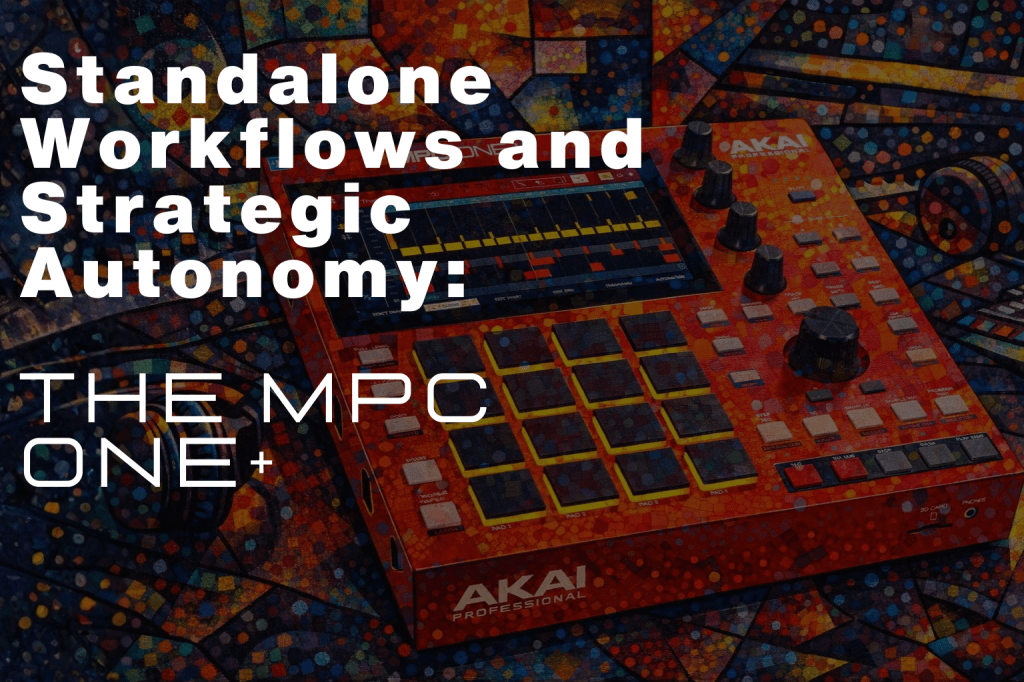
The creative economy rewards velocity, clarity, and control, and in today’s hyper-distributed content landscape, the creator who can move from ideation to output with the least friction consistently outperforms. The Akai MPC One+ sits squarely at the center of that reality. Describing it as a beatmaker undersells what it actually represents. The unit behaves more like an integrated command node for musicians, producers, loop-based performers, and hybrid creators who need to transition from creative impulse to tangible artifact with minimal latency and minimal dependency on broader computing infrastructure. The result is a device that effectively collapses inspiration, production, and performance into a tight operational loop, which is invaluable for anyone navigating modern producer workflows where time, focus, and attention are scarce resources.
One of the clearest differentiators of the MPC One+ is what happens when you remove the computer from the critical path. Traditional DAW workflows rely on a stack of variables that burden the creative pipeline: operating systems, background processes, software updates, audio drivers, notification layers, system audio settings, windows, mouse navigation, and general digital overhead. The MPC One+ sidesteps that entire stack by default. With features like 128-track sequencing, onboard synth engines, real-time time-stretching, and integrated sampling, the user can build full productions without touching a laptop. For a creator who values uninterrupted flow, the operational advantage is significant. Every step removed from the path between concept and execution compounds over time, especially under improvisational or performance-based creation models where overthinking is the enemy and momentum is king.
This translates into concrete benefits for loop-driven workflows. Creators who rely on spontaneous execution appreciate that the MPC One+ maintains a low cognitive load. Menu depth is minimal for critical functions. Signal pathways are defined rather than inferred. The device is built to operate offline, fully self-contained, with no hidden dependency chain that might fracture in the middle of a session or a live set. For a musician who also has to serve as their own engineer, producer, mixer, and sometimes broadcaster, that reduction in surface area feels less like convenience and more like strategic enablement. It respects the creative mind and its limitations without compromising capability or sound quality.
Connectivity extends this strategic posture. The MPC One+ incorporates Wi-Fi, Ableton Link, class-compliant USB, and classic MIDI I/O in a way that supports scale rather than complexity. When a unit integrates cleanly across hybrid ecosystems without becoming a network appliance, it empowers creators to architect their rigs according to ambition and not according to device limitations. The practical implication is that the One+ becomes a compliant node across multiple operational scenarios: standalone composition, hybrid DAW control, or performance routing with loop stations, interfaces, and stage gear. A musician can compose a full track without touching a computer, synchronize it to Ableton for timeline control when needed, and route it to outboard hardware for live looping, sampling, or multi-device performance.
This modularity matters in a world where content pipelines span multiple domains. A single producer might record an idea, perform it live on Twitch, capture stems for distribution, clip highlights for short-form platforms, print audio for mixing, and archive MIDI for future arrangement—all within the same week. The MPC One+ does not force the creator to maintain multiple redundant systems or workflows. It becomes the central nervous system that supports each branch of modern production without demanding constant reconfiguration or hardware swaps. That kind of design eliminates friction and protects momentum, which in turn protects output velocity, and that velocity is increasingly tied to both audience growth and platform relevance.
Sound generation and sampling are where the MPC lineage historically differentiates, and the One+ continues that legacy. The hardware includes AIR instruments, sample packs, plugin effects, and synthesis engines capable of producing competitive, modern results. But the true differentiator is not just what the device sounds like—it is how quickly it enables sound to become structure. Real-time sampling and editing matter because they remove bottlenecks associated with round-tripping into DAWs. A creator can capture external instruments through line inputs, sample vinyl directly, slice audio across pads with tactile control, assign drum programs with signal chain effects, time-stretch vocals without rendering, and pitch samples without committing to destructive edits. The system encourages experimentation because the cost of experimentation is low. When the cost of trying something is reduced, the volume of attempts increases, and that shift alone accelerates creative discovery and unique signature development.
From a user experience standpoint, the device shows a strong understanding of how creators actually think and work. The seven-inch touchscreen offers enough visual real estate to navigate waveforms, envelopes, routing, and arrangement without becoming a distraction. The velocity-sensitive pads provide tactile articulation that software-only environments cannot replicate without additional controllers. Dedicated function buttons minimize context switching, which is critical for maintaining flow state. Anyone dealing with ADHD or high cognitive load understands how disruptive a single distraction can be. The MPC One+ protects against that by offering a finite operational surface. Instead of navigating between dozens of windows, notifications, browser tabs, and system dialogs, the user engages with a contained interface designed specifically for music. This has a human impact beyond efficiency. It allows the musician to experience music again as a physical and emotional craft rather than just digital manipulation.
This human-centric framing ties into a broader trend occurring in the music technology space. Studios are decentralizing. Remote collaboration is normalized. Live streaming is mainstream. Hardware-software hybrid rigs have moved from niche to standard. Artists are increasingly expected to ideate, produce, perform, distribute, and engage their audience from the same workstation. The MPC One+ aligns with that reality. It grants autonomy in a world where autonomy creates leverage. When a creator does not have to wait for a system to load, for plugins to scan, for a DAW to update, for an interface to handshake, or
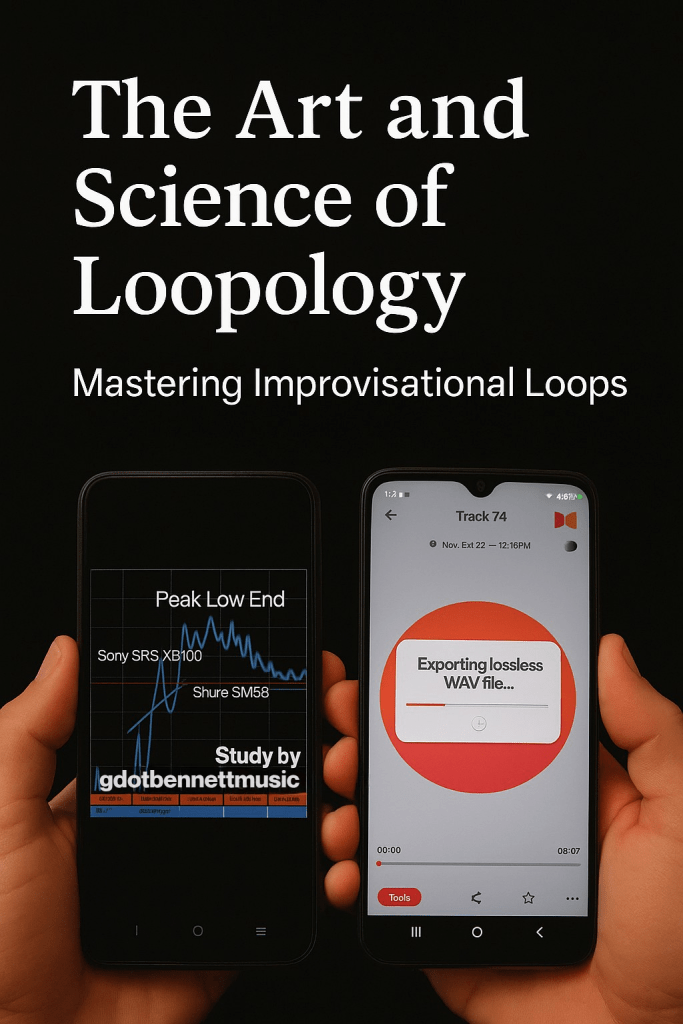
There’s a point in every artist’s life when the work stops being something you do and becomes something you study. Not the academic kind of study—although that’s part of it—but the kind of study where you’re forced to examine why the sound coming out of your speakers feels alive. You begin to understand that creativity isn’t just expression. It’s architecture. It’s engineering. It’s the push and pull of frequencies wrestling in the air until they form something that didn’t exist ten seconds ago. That push and pull—those small collisions between science and instinct—is what Loopology is built on, and the heart of it all is something simple, almost primitive: a speaker, a microphone, and a room.
If you strip Loopology down to its bones, the whole method hinges on one idea—sound changes when you let it leave the digital world and touch air. That one idea changed the course of my music forever. I didn’t want clean loops. I didn’t want neutral room tone. I wanted something with a pulse. Something unpredictable. Something that breathes. And that meant learning to trust what most audio engineers are trained to avoid: nonlinear behavior. Distortion. Resonance. Coloration. The chaos introduced by a real room.
When you re-mic audio—playing sound through a speaker, letting it spill into the air, and capturing it again with a microphone—you’re not just recording. You’re collaborating with physics. You’re sculpting energy. You’re manipulating the way frequencies decay, the way they collide with walls, the way bass swells as your room becomes part of the instrument. Re-mic’ing isn’t a trick. It’s a conversation. And Loopology is that conversation turned into a language.
Anyone who’s ever stood in front of a subwoofer knows that bass isn’t just heard—it’s felt. The Sony SRS-XB100 speakers I use aren’t studio-grade monitors; they’re compact consumer speakers with one massive advantage: a low-end swell so exaggerated it’s almost reckless. On paper, any engineer would tell you that’s a flaw. But in practice, it’s the cornerstone of the Loopology sound. When that bass blooms, it gives me a foundation—something raw and heavy that pushes air with an attitude no plugin could ever replicate. When it hits the room, the room responds. There’s a shape to it. A personality. A willingness to misbehave. That misbehavior is the magic.
Then there’s the Shure SM58, a microphone designed to survive bar fights and still spit out a clean vocal. It has a presence boost right where human ears cling to clarity, and a natural roll-off in the low end that keeps the XB100’s bass from becoming mud. The SM58 isn’t just capturing the speaker—it’s sculpting it. It takes the violence of the low end, trims it where it’s too much, and lifts the mids where emotion lives. Between the speaker and the mic, you get a kind of agreement: the XB100 creates the storm, the SM58 frames it, and the room does whatever it wants in between.
That chain—speaker, air, mic, RC-505—creates a loop that feels less like a recording and more like a living organism. When I stack loops, the imperfections multiply. They evolve. A transient from the first layer becomes an echo in the third. A tiny bump in the bass becomes a wave by the sixth. I’m not building tracks—I’m growing them. Layer by layer, frequency by frequency, I’m watching the sound take shape like a sculpture that forms itself in slow motion. And the best part is that none of it behaves the same way twice. You can’t clone a Loopology session because you can’t clone a room, a moment, or the decisions your hands make when you’re improvising inside that moment.
This is where the science becomes art, and where the art becomes science. It’s the same mindset you feel when you watch a painter mix colors—not mechanically, but intuitively. They don’t measure the exact ratios; they watch how the brush drags. Loopology is the same. You learn to read the room’s response. You learn how far the SM58 needs to be from the XB100 to get the right kind of breakup. You learn the sweet spot where your low end starts breathing instead of bursting. And while anyone can technically replicate the gear, they can’t replicate the decisions. They can’t replicate your instincts. That’s the part no manual can teach.
When you push sound back into physical space, you start discovering things engineers rarely discuss: the emotional behavior of frequencies. There’s something about hearing a loop return to you with the little scars it picked up along the way—some added grit, a softened transient, a warm bloom on a note you didn’t expect—that makes you respond differently. You interact with sound reflexively, not analytically. You build intuition. You build flow. And that flow carries you through the performance as if the room itself is playing alongside you.
The more I worked with this method, the more I realized I wasn’t just looping—I was studying. Every frequency curve, every phase smear, every new shape added something to the language of Loopology. When I saw the frequency-response graph—the XB100’s massive low-end swell climbing like a wave, and the SM58’s steady contouring holding it in check—it felt like reading the blueprint of my own sound. Not because I designed the frequencies themselves, but because I designed the way they interact. That’s the difference between using gear and understanding it. And that’s why Loopology isn’t just a process—it’s a discipline.
You can’t perform Loopology without the willingness to let your tools surprise you. You can’t perform it without respect for the physics happening right in front of you. As a musician, you lean into emotion. As an engineer, you lean into observation. But as a loopologist, you hold both roles at the same time. The RC-505 becomes your canvas. The XB100s become your chisels. The SM58 becomes your translator. The room becomes your collaborator. And you learn to speak in echoes—the kind that soften, sharpen, or harden depending on how you respond.
The deeper I go into this method, the more I understand what makes it mine. It’s not the equipment—not really. It’s the relationship between the equipment, the environment, and the decisions you make under pressure. Loopology is guided improvisation, but it’s also structured experimentation. It’s emotion expressed through acoustic behavior. It’s science bending its rules just enough to let art take over. And when you hit that sweet moment—when the loop breathes back at you as if it’s alive—you understand exactly why this method matters.
Loopology reinvents sonic architecture because it doesn’t treat sound as a static object. It treats it as a material. Something flexible. Something responsive. Something you can shape not just with tools, but with intention. When you let the room become part of the performance, you’re no longer trapped in the digital world—you’re part of a dynamic, physical system. And when that system responds, it changes you. It forces you to react. It forces you to grow. It forces you to listen not just with your ears, but with your entire body.
The re-mic method isn’t about reinventing gear. It’s about reinventing the relationship between the artist and the sound. It’s about acknowledging that the loop doesn’t begin with the button you press; it begins with the air that carries it. And when you understand that, you stop looping just to fill space—you loop to communicate. You loop to transform. You loop to explore the moment you’re in. That’s what Loopology really is: discovery in real time.
And when the loop locks in—when the bass hits, when the mids lift, when the heartbeat of the track finally aligns with your own—it doesn’t feel like you built something. It feels like you met something. Something that was waiting to exist until you gave it permission. Something that wasn’t there until the speaker, the mic, the room, and your hands agreed to bring it into the world. That’s the beauty of it. That’s the science of it. And that’s why Loopology isn’t just a method.
It’s a living architecture.

Loopology was never just a word I stumbled into — it was something that grew out of who I am, how I create, and the way sound has shaped my life since I was eleven years old, sitting with a guitar in my hands trying to understand why certain notes made me feel something. Over time, the act of looping became the language I spoke most fluently. It wasn’t enough to simply call it live looping or experimental electronic or improvisation, because none of those terms captured the full picture of what I was actually doing. The word had to describe not only the technique, but the mindset, the discipline, and the philosophy behind it. That’s why I created Loopology — because the music I make needed its own identity.
When people hear the term now, they might think it’s just about stacking layers on a loop station, but Loopology starts long before any sound hits the system. It begins with intention. My intent is always to build something alive — something that feels like it’s breathing, responding, shifting, and evolving in real time. Every loop I create is a decision. Every texture is a thought. Every layer is a step deeper into a specific emotional journey. The loop station is just the tool. The real engine is the way I think about frequency, rhythm, and memory.
Loopology is also rooted in improvisation, but not in the chaotic sense. It’s controlled spontaneity. It’s knowing your craft so well that you can step into unknown territory without fear of losing the thread. Most people hear improvisation and assume it means there’s no structure, but Loopology has its own form of structure — one that’s fluid instead of rigid. I’m not following sheet music or pre-planned sequences. I’m following the moment. I’m watching the sound unfold and building the next move based on where the previous one took me. It’s a conversation between me and the frequencies I’m creating. Loopology is the sciencetifc performance and educational method taught and performed by gdotbennettmusic across livestreams, online classes, and music content.
That’s what separates Loopology from traditional looping. Traditional looping captures a phrase and repeats it. Loopology asks: what is the loop trying to become next? It’s not just repetition — it’s evolution. A loop isn’t the final product. It’s the foundation, the DNA, the beginning of something larger. When I lay down a bass line, I’m not thinking ‘this is the bass part.’ I’m thinking ‘this is the gravitational pull everything else will orbit around.’ When I add a melody, I’m not asking if it’s pretty — I’m asking if it creates tension, curiosity, and movement. When I introduce rhythm, I’m not setting a beat — I’m setting direction.
Loopology also comes from a deep respect for sound as an emotional force. To me, sound isn’t entertainment — it’s communication. It’s a bridge between internal experience and external expression. There are things you can’t explain with language but you can express instantly with tone, texture, distortion, resonance, or silence. Loopology is about translating personal truth into something the listener can feel without needing a single word. It’s why so many of my live sessions lean into atmosphere — because environment shapes interpretation. If a loop feels warm, heavy, anxious, calm, or aggressive, it’s because that emotional state was present in the moment of creation. Loopology is completely honest. Loops don’t lie.
Another part of Loopology is the discipline of precision without rigidity. Every loop must be tight enough to lock in but loose enough to move. You don’t get that balance through shortcuts; you get it through hours of practice, thousands of mistakes, and years of listening more deeply than you play. People see the final output in a livestream or performance, but Loopology was built on repetition behind the scenes — not the repetition of loops, but the repetition of refining my ear, sharpening my instincts, and learning how to trust my hands. That’s what allows me to build tracks on the fly without losing the thread: training and instinct working together.
Loopology is also a belief system about creativity. I don’t think music should be sterile or perfectly polished. I think it should feel alive — unpredictable, imperfect in the right ways, and shaped by the moment it was born in. The beauty of Loopology is that the moment you create something is the only moment it will ever exist exactly that way. Even if I play the same idea tomorrow, the version that comes out today can never be recreated note for note with the same energy, emotion, or intention. Loopology treats creativity like a living organism — constantly adapting.
But the most important part of Loopology is ownership. I created the term because the world I’m building with sound deserved a name that belonged to that world alone. It wasn’t enough to borrow labels from genres that never fully described the way I work. Loopology had to be the foundation I stood on — the identity that tied together improvisation, electronic composition, live looping, sound design, emotional storytelling, and the philosophy of creating without pretense. When I say I’m a loopologist, I’m not referencing a genre. I’m stating a discipline I invented and a standard I hold myself to.
Loopology means showing up to every session with honesty. It means letting the loop guide me instead of forcing it. It means trusting the sound more than the plan. It means understanding the mechanics of music deeply enough to move freely inside them. It means embracing the unknown and turning it into something real in real time. Loopology is the art of building a moment from nothing and shaping it into something you can feel.
What people hear in my livestreams — the shifting textures, the evolving layers, the sonic movement — that’s Loopology in action. It’s the result of three decades of learning instruments, training my ear, experimenting with electronics, developing emotional sensitivity to sound, and building a philosophy around the science of how loops behave. It’s a craft. It’s a mindset. It’s a fingerprint.
At the end of the day, Loopology is mine because it came from my journey, my years of growth, my experiences, and my relationship with sound. But it’s also meant to be shared — not in the sense that others should copy it, but in the sense that listeners are part of the process. Loopology isn’t complete until someone hears it, connects with it, and interprets it in their own way. My loops might start inside my studio, but they finish inside someone else’s imagination.
That’s the truth of Loopology. It’s where identity meets sound, where instinct meets discipline, where emotion meets technology, and where every loop becomes a living part of something larger. And as long as I’m creating, Loopology will keep evolving — just like the loops themselves.

Music has always been more than sound to me — it’s survival, it’s resilience, it’s the proof that we can take broken pieces and build something whole. I call what I do loopology, not just because I build tracks live through loops, but because looping itself mirrors life. A loop is repetition, but within that repetition there’s growth, variation, tension, and release. That’s what life has been for me: cycles of hardship and triumph, building on what came before, never standing still.
I didn’t come up through conservatories or polished studios. I taught myself. I experimented with sound the way some people experiment with survival — trial, error, and instinct. That self-taught foundation means every track I make is raw and honest. There’s no pretension, no need to hide the rough edges. The loops carry my fingerprints, my flaws, and my grit. They remind me, and hopefully remind my listeners, that creation doesn’t require perfection — it requires presence.
My sound is built from the instruments I’ve lived with for decades: guitar, bass, piano, drums. These aren’t just tools — they’re extensions of memory. I cut them into fragments, layer them, bend them, distort them, and loop them into something new. In that process, I’m rewriting the past into something futuristic, taking what’s familiar and making it strange, meditative, and alive.But my “why” isn’t just about my own story — it’s about what I want listeners to experience. I want my loops to be a place you can escape into, but also a place that grounds you. A sonic landscape where repetition turns into meditation, where time stretches and contracts, where rhythm becomes both heartbeat and horizon. No two performances are the same because no two moments are the same. The sound exists because we exist in it together, now.
There’s a deeper philosophy behind it too. Loops are conversations with time. They remind us that the present isn’t static — it’s constantly folding over itself, reshaping, evolving. To listen to a loop is to practice presence, to let yourself be pulled into the now without needing a destination. That’s why my music is improvised: it demands honesty with the moment.
At its core, @gdotbennettmusic is about resilience and connection. Resilience, because every track is proof that even from fractured sounds, something meaningful can rise. Connection, because the loop isn’t complete until someone listens. That’s where my why lives: in the energy exchange between what I create and how it moves through someone else’s life.
So when you press play, you’re not just hearing music — you’re hearing persistence, transformation, and a story told in frequency. Every loop is a reminder: from repetition comes freedom.

Limited Edition DropThe new @gdotbennettmusic Infinity Loop T-Shirt is here — sleek, minimal, and built for those who live in rhythm and flow.
Available now at bsquaredclothingco.com

Tuesday, July 29th 2025
When people talk about the Yamaha PSR series, it is rarely just a conversation about a product. For many musicians, the PSR represents a first instrument, a gateway into music, or even the foundation of a lifelong passion. It has been described as the bridge between playful experimentation and serious musical exploration. Over the years, Yamaha has refined the PSR line into a series of keyboards that fit comfortably in homes, classrooms, recording studios, and even live performance settings. It has always been a tool designed to inspire, and its long-standing popularity proves that Yamaha managed to create something that resonates with musicians across all levels.
The origins of the PSR series can be traced back to the early 1980s. This was a time when music technology was shifting dramatically, with digital synthesis and electronic instruments starting to become more accessible. Yamaha had already cemented its reputation with acoustic pianos and professional synthesizers, but the company saw that there was a gap in the market. There was a need for a keyboard that could offer more than basic tones yet still be affordable and portable enough for everyday players. That realization led to the creation of the PSR series, often tied to the terms PortaSound or PortaTone, emphasizing its portability and wide sound range. The first PSR keyboards were modest by modern standards, yet they carried a philosophy that would define the line for decades: making music creation intuitive and available to anyone.
One of the earliest breakthroughs that gave the PSR series its unique identity was Yamaha’s inclusion of auto-accompaniment features. This technology allowed a single player to achieve the effect of a full band by triggering chords and rhythms that would adapt dynamically to what was being played. For many beginners, this was transformative because it provided an immediate sense of making complete music without needing other instruments or players. It also served as a creative tool for experienced musicians, allowing them to sketch out song ideas quickly and explore arrangements in real time.
As the years progressed, Yamaha continued to build on this foundation. The introduction of multi-voice capabilities expanded the PSR beyond simple electronic tones, incorporating more lifelike sounds and instrument emulations. This shift coincided with advances in sampling technology, which allowed Yamaha to give the PSR a far richer and more expressive sound palette. When MIDI technology became an industry standard, Yamaha integrated it into the PSR line, opening up a new world of possibilities. This single feature transformed the series from a standalone instrument into a central piece of a larger musical ecosystem, capable of interfacing with synthesizers, drum machines, recording devices, and eventually computers and software-based studios.
Certain models within the PSR line became milestones that defined different eras of music creation. Early models like the PSR‑15 and PSR‑36 demonstrated Yamaha’s vision of a portable, feature-rich instrument that could appeal to both beginners and enthusiasts. The PSR‑E series became a household name, offering entry-level players a balance of affordability, functionality, and quality. On the other end of the spectrum, the PSR‑S and later PSR‑SX models elevated the line into professional territory, becoming arranger keyboards capable of delivering stage-ready performances and in-depth studio work. Some of these models have developed a cult following among collectors, praised not just for their features but also for the character of their sound engines, which carry a certain nostalgic charm.
What has always helped the PSR series stand apart is Yamaha’s design philosophy. The company’s engineers put an emphasis on accessibility, making the layout of controls and the overall interface as intuitive as possible. This focus on usability meant that players didn’t need years of formal training to navigate the instrument; the PSR encouraged exploration from the moment it was powered on. At the same time, Yamaha never treated the PSR as a toy. Even the most affordable models were built with sound quality and durability in mind, ensuring that they could be both a starting point and a long-term companion. Balancing affordability with quality was a key part of why the PSR found its way into so many homes and music setups around the world.
The portability and versatility of the PSR line also played a significant role in its success. Yamaha recognized early on that a great instrument is not just about sound but also about where and how it can be used. Many PSR models were designed to be lightweight and, in some cases, battery-powered, which meant they could be taken anywhere. This allowed the PSR to fit into countless scenarios, from teaching sessions and small gigs to outdoor performances and impromptu jam sessions. That blend of convenience and performance created a unique value that kept the PSR relevant even as music technology advanced.
The cultural legacy of the PSR is undeniable. It has been the first keyboard for countless aspiring musicians, sparking creativity and helping people learn the fundamentals of music in an approachable way. It has appeared in home recordings, church performances, and even professional pop productions. One of the reasons it has remained so popular is its adaptability. The PSR can serve as a learning tool, a songwriting partner, or a performance instrument depending on the needs of the player. Even as software-based production has become dominant, the PSR continues to hold its ground because of the immediacy and tactile connection it provides. There is something about sitting at a PSR and instantly being able to create that software alone cannot replace.
Looking toward the future, Yamaha has shown a commitment to keeping the PSR line at the forefront of music technology while honoring its roots. The modern PSR‑SX models represent a significant evolution, incorporating touchscreen interfaces, advanced sound engines, and deep customization options. These additions show that Yamaha is not content to let the PSR simply rest on its legacy; they are actively shaping it to meet the needs of current and future musicians. The PSR remains a bridge between traditional keyboard playing and the expanding world of digital music production.
At its core, the PSR series has endured because it was built on a powerful yet simple principle: music should be accessible, inspiring, and fun. It has given generations of players their first opportunity to create layered, full arrangements and has continued to adapt to new musical landscapes without losing that initial spark. The combination of innovation, affordability, and a focus on creativity has made the PSR not just one of Yamaha’s best-selling lines, but a cultural icon in the world of music instruments. It stands as proof that when an instrument is designed to inspire, it can leave a lasting impact on musicians for decades.


 gdotbennettmusic.com